
For Life Science PhDs & Postdocs
How to Land Your Dream Industry Job in Germany — Straight Out of Academia
You’ve sent hundreds of applications. Attended every career event. Rewritten your CV more times than you can count. And still: silence. Here’s why — and what actually works.
- Land interviews — without sending hundreds more applications
- Prove you're industry-ready — without needing prior industry experience
- Get hired — without collecting more certificates you don't actually need
- Land the right-level role for you — without being boxed in as "overqualified" or "underqualified"
- Forge your path into German industry — without wasting years chasing a C1 certificate first
AZAV-certified · Recognized by Agentur für Arbeit & Jobcenter
Most Academics Waste Months With an Unfocused Job Search
Industry doesn’t hire skills. Industry hires profiles. Two people can share the exact same scientific background and still need completely different strengths depending on the role — one detail-oriented and analytical, the other relationship-driven and persuasive. You can’t be equally qualified for every role connected to your field. You first have to find the one or two roles that actually fit you — then position yourself for them.
That’s the real reason applications go nowhere. Not a weak CV. A CV that still says “I’m a scientist who can also do this” instead of “I’m a project manager with a scientific background.” That single shift in how you present yourself changes everything.
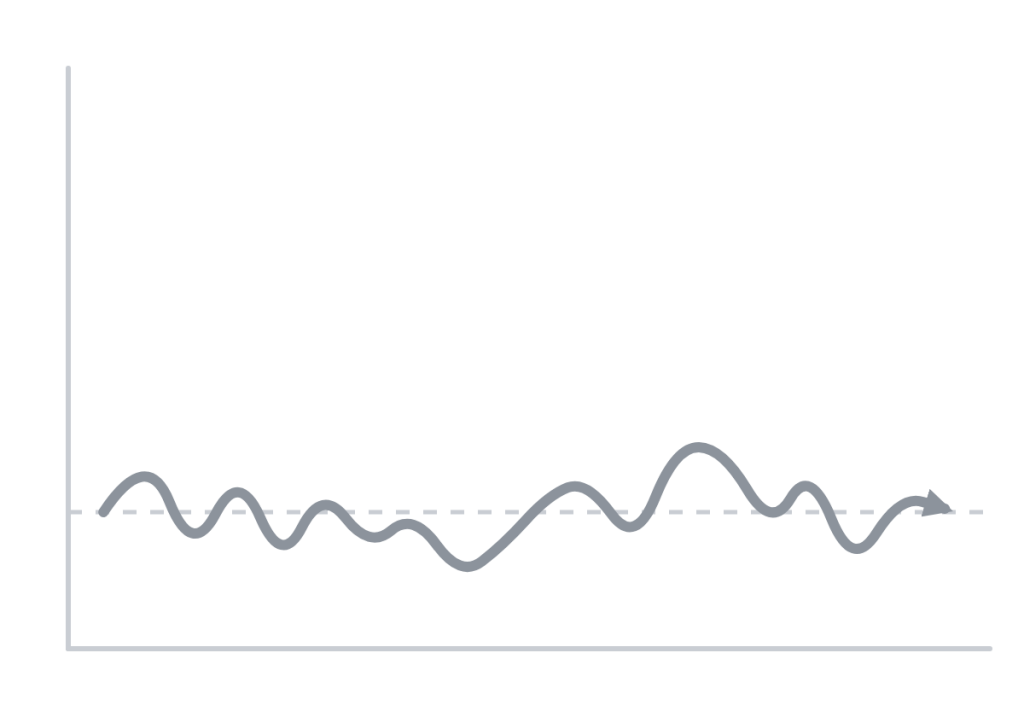
- Applying to anything remotely related to their expertise
- CVs that read "I'm a scientist who can also do X"
- No response, no feedback, no idea why
- Months pass with no clear direction
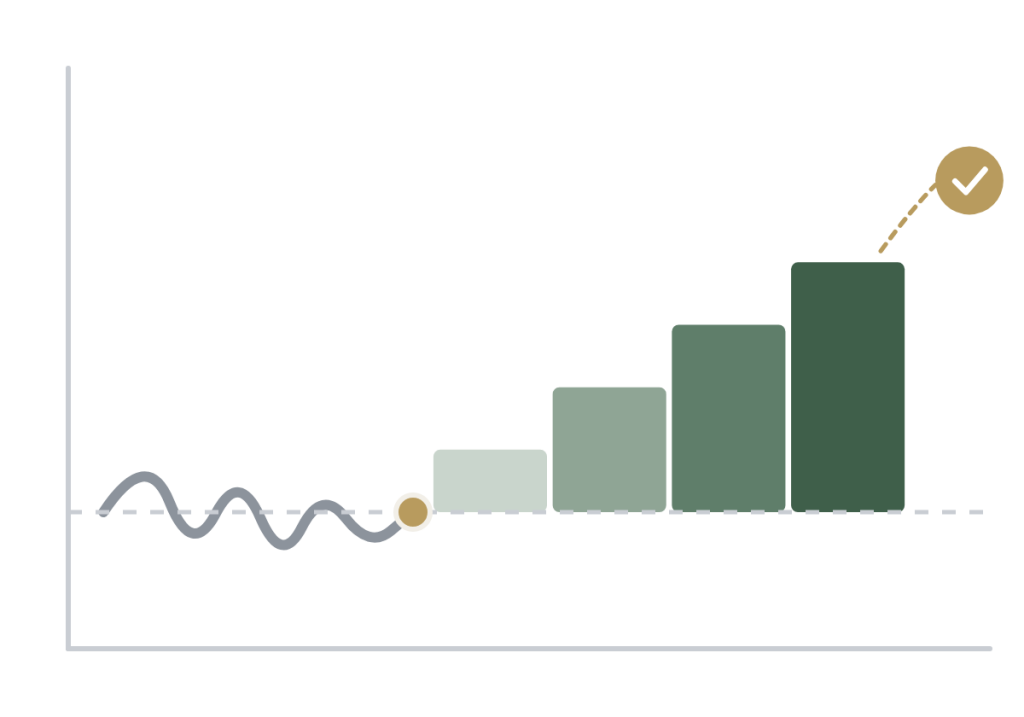
- A clear, evidence-based role match before applying anywhere
- Documents that say "I'm a [role] with a scientific background"
- A structured path into the hidden job market, not just job boards
- Interviews and offers that follow from clarity, not luck
The problem was never your CV. It’s positioning.
The BeyondAcademia Career Transition Framework
Built from fighting through our own transition into industry — and years spent on the other side of the hiring table.
1
Career Orientation
We assess your hard skills, soft skills, and personality — and identify the one or two roles that are genuinely the best fit for you.
2
Professional Positioning
We transform your CV, cover letter, and LinkedIn so employers see the professional you are — not the academic you’re trying to stop being.
3
Job Search Strategy
You learn how to find the right employers, use networking effectively, and reach the hidden job market most applicants never see.
4
Interview Preparation
Mock interviews, story development, and salary negotiation prep — so you walk in already convinced you belong there.
Job Offer
If you’ve been applying for months — or even years — and you’re still not getting the results you want: stop sending more applications. Start positioning yourself for the right role. Here’s how we can help.
Three Ways to Work With Us — Pick What Fits Where You Are
Most Popular
Industry Transition Blueprint
397€
20 weeks · self-study program · Full framework curriculum
- The full Career Transition Framework
- 15+ hours of real coaching call recordings
- 20 weeks of self-paced access

Popular With Postdocs
Career Transition Accelerator
2.850€
12 weeks intensive or 24 weeks extended · Same framework plus 1:1 coaching
- Live 1:1 coaching calls for 10 topics
- Career orientation, document reviews & mock interviews
- Choice of 12-week or 24-week pace

AVGS-Sponsored Career Coaching
0€
3.709€ value, funded by Agentur für Arbeit or Jobcenter · up to 12 weeks · Same framework
- Fully funded with a valid AVGS voucher
- Same live coaching as the Accelerator
- AZAV-certified program

Coaches Who've Sat on Both Sides of the Hiring Table
Specialized in Life Sciences
We only work with life science PhDs and postdocs — which means we already know what “cyclin-dependent kinase” means, and exactly how to translate it into language a recruiter without a science degree can actually understand.
Built for Germany
German hiring culture and the hidden job market — built into the program, not bolted on.
Coaches Who've Been on Both Sides
Every coach on our team has made this exact transition themselves — and has hiring-side experience in German industry. You get both perspectives from whoever you work with.
Our Clients Received Offers From
Certified Quality & Trusted By Public Institutions

To offer courses funded by Agentur für Arbeit and Jobcenter, providers must complete a strict accreditation process. BeyondAcademia and our program “Career Coaching for Life Science PhDs & Postdocs” hold AZAV certification — which is what allows us to offer this coaching completely free to clients with a valid AVGS voucher. Check your AVGS eligibility
What Our Clients Say

“Lira and Tobias have changed my mind about the whole hiring process, and I am so grateful for that. What I liked the most about their coaching program is how intelligently it is structured. […] I got the job as a result. Joining their program was one of the best decisions in my career.”
Aliia, Polymer Chemist

“When I started looking for jobs, I applied to 20+ positions but was either ghosted or received generic rejections without explanation. This program gave me a clear strategy. […] Thanks to this program, I not only gained confidence, but also got an offer!”
Zhaoyan, Business Development Manager

“[…] after just one session with Lira and Tobias, that doubt was completely resolved, and I began to see myself as a valuable asset. […] Thanks to Lira and Tobias, I successfully landed a job, and I highly recommend their guidance to anyone looking to transition from academia-to-industry.”
Deepthi, Compliance Consultant
1. How much does it cost if I can't get AVGS funding?
Two self-funded options: the Industry Transition Blueprint (self-study, 397€) or the Career Transition Accelerator (1:1 coaching, 2.850€). [See both options here]
2. Will this work in the current job market? How long will it take?
The current job market is harder than we’ve ever seen. How long it takes depends on your field, your German level, how flexible you are on location, and how closely you follow the program. We’ve seen clients land a job in as little as seven to eight weeks, and others take six to nine months — but most get their first interview invitations within three months.
3. I'm not in Germany. Can you still help me?
Yes — but please be aware that the transition will be harder from outside Germany than it would be if you were already here.
If you already have previous industry experience from outside of Germany, the transition to Germany becomes a lot easier.
If you already have previous industry experience from outside of Germany, the transition to Germany becomes a lot easier.
4. Does your program only work for the German job market?
No. We specialize in Germany because that’s where we’ve worked, hired, and built our network — but the same principles we teach and coach on apply just as well in other European markets, like the Netherlands, Switzerland, and Austria.
5. Do I need to learn German first?
It depends on your level. To be considered a German speaker you need C1 – C2 level. If you are currently at A1–B1, it’s not worth pausing your job search for this. Reaching the C1/C2 level companies actually require takes too long and costs you job-search time. At B2 or C1, though, pushing further might be worth it.
6. Can you help me access AVGS funding even if I'm not sure I qualify?
Yes. The fastest way to find out is our eligibility check. [Check your AVGS eligibility]
7. What's the difference between the Blueprint, the Accelerator, and AVGS coaching?
The Blueprint is self-study with no 1:1 coaching — our most cost-effective option.
The Accelerator is the same curriculum plus individual support through 1:1 coaching sessions, self-paid.
AVGS Coaching is that same 1:1 experience, funded by Agentur für Arbeit or Jobcenter instead of out of your own pocket.
8. When is the best time to start the program?
It depends on your time- and mental capacity.
The program (12-week version) takes at least 15 hours a week to work through properly.
So if you’re already unemployed, the best time to start is yesterday.
If you’re in the final stretch of your PhD — finishing experiments, writing your thesis, prepping your defense — it’s probably not the right moment to add that on top.
For postdocs who are still employed, there’s no bad time to start: our 24-week track cuts the workload to about 5–7 hours a week, built to run alongside your job.
9. I already paid for career services to fix my resume, and it didn't help. How are you different?
Making the transition from academia to industry isn’t a CV-editing problem — it’s a translation problem. We specialize in recognizing the business value in academic achievements that most career services simply don’t know how to read. Try explaining to a generic resume coach why a plasmid purification technique matters to a hiring manager, and you’ll see the gap we close.
We understand both sides because we’ve lived both sides: Lira’s PhD and postdoc in Life Sciences give her the academic side, and both Lira and Tobias have hired for roles in German industry, so they know exactly what a hiring manager is actually looking for when your application lands on their desk.
10. Is this program right for me?
We only take a limited number of new 1:1 clients each month, so we look for people who are genuinely ready to commit to the process — not just the outcome. (This one’s specific to the Career Transition Accelerator and the AVGS-sponsored coaching — the self-study Blueprint works differently, at your own pace.)
What tends to work well:
– You’re curious and open to trying an approach that’s different from what you’ve tried before
– You understand the job search can be slow and non-linear, especially right now
– You’re motivated and ready to follow through, even when a week gets busy
– You’re open to feedback from people who’ve done this before, and ready to apply it
What tends not to work as well:
– You’re hoping for a quick fix without wanting to do the work in between sessions
– You don’t currently have the 5+ hours a week the program asks for
– You’re confident your PhD alone should be enough, without translating it into value an employer can see
– You’d rather stick with your own approach than try what’s worked for other clients
– You’re spending more energy on what’s outside your control — the market, the system — than on what you can actually change
11. My PhD project was purely scientific, with no obvious business application. Should I get an additional certificate (GxP, Life Science Management) or an MBA before working with you?
If you don’t yet know how to sell one of the highest degrees there is — your PhD — getting another one won’t fix that. A degree without demonstrated experience behind it doesn’t carry much weight on its own.
Your research might feel far removed from business, but the skills you built getting through it — structured problem-solving, project management under uncertainty, translating complex information for people outside your field, working independently toward a long-term goal — are valuable in almost any role. The work is translating them, not adding to them.
The same goes for certificates. A GMP certificate matters for quality-specific roles and little else. The same is true for Life Science Management, Project Management, or similar certifications — they only help if they’re directly relevant to the specific role you’re applying for. Spending months and thousands of euros on a certificate before your positioning problem is solved is an expensive detour, not a shortcut.
12. Do you only help academics to make the transition of do you also help professionals with previous industry experience?
We do also help professionals with previous industry experience to find their new role and take the next step in their profrssional careers. If you are interested in finding out more, please schedule a “chemistry-call” with Lira to discuss how we might be able to help you.
See What's Inside
Prefer live coaching? See the Career Transition Accelerator and AVGS-sponsored coaching above.